
Peanut butter is one of those foods that shows up on both lists. Some reflux lists call it a safe, filling snack. Others put it on the “avoid” side. No wonder people in my Facebook group keep asking about it.
I’ve had acid reflux for 19 years, I have a BS in Nutrition from the University of Florida, and I was diagnosed with Barrett’s esophagus. My doctor told me my last scope was clear and I no longer have Barrett’s. Here’s exactly what I did: I changed what and when I ate, worked on my weight and my sleep, followed my doctor’s plan, and drank a cup of Barrett’s Tea every single night.
Peanut butter is still in my pantry. What I learned is that the kind you buy, how much you eat, and what you spread it on matter a lot more than the peanut butter itself.
Is Peanut Butter Good or Bad for Acid Reflux?
For a lot of people with reflux, a small amount of smooth peanut butter sits just fine. It isn’t acidic, it isn’t spicy, and it has no caffeine. It also gives you protein and fiber, which help you feel full so you’re less likely to overeat later.
The catch is fat. Peanut butter is high in fat, and big amounts of fat take longer to leave your stomach. A full stomach for a long time is one of the things that can push acid up. That’s why peanut butter lands on some “avoid” lists.
So it comes down to a few things:
- Amount. One level tablespoon is a very different meal from three heaping spoonfuls.
- The kind you buy. Plain peanut butter with just peanuts and salt is simpler than kinds with added sugar, chocolate, or extra oils.
- What it’s paired with. Peanut butter on oatmeal is gentle. Peanut butter in a chocolate milkshake is not.
- Your own body. Some people do great with it. Some notice a burn even with a little.
Triggers are personal, so I always say: test, don’t guess.
Smooth or Crunchy?
I eat smooth. It goes down easier and spreads thin, which makes it easy to keep the portion small. If your throat feels sore or raw, smooth is usually the more comfortable choice. If crunchy doesn’t bother you, it’s fine to keep eating it.
How I Eat Peanut Butter
| How I Eat It | How It Feels for Me | Tips |
|---|---|---|
| Spread thin on whole-grain toast with banana | Gentle, my everyday use | One level tablespoon, no butter underneath |
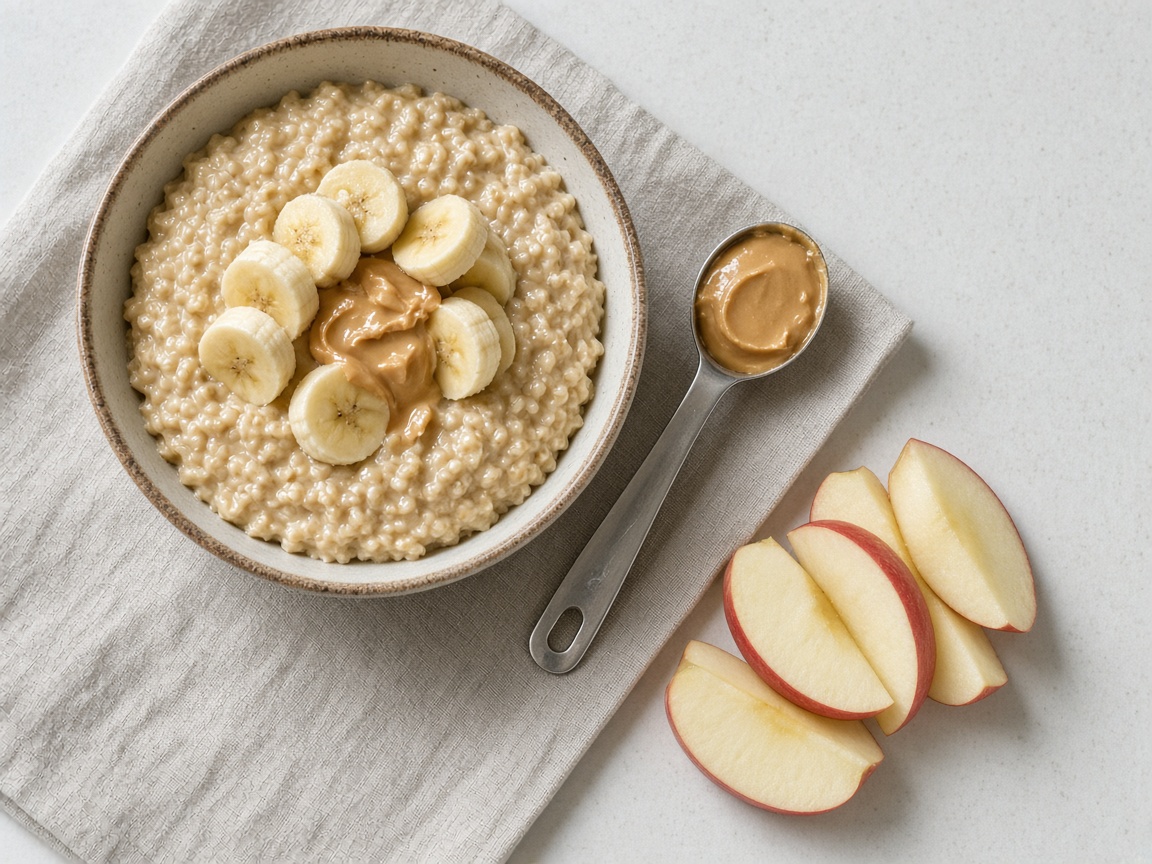
| Stirred into oatmeal | Gentle | Plain oats, water or low-fat milk |
| With apple or pear slices | Gentle | Pick sweet apples like Gala or Fuji |
| On celery sticks | Gentle | Good crunchy afternoon snack |
| Peanut butter and jelly sandwich | Usually fine | Go light on the jelly, skip citrus marmalade |
| Peanut butter cups, cookies, or candy bars | Usually a problem | Chocolate, sugar, and fat all add up |
| A big spoonful straight from the jar at night | Usually a problem | Too much fat right before lying down |
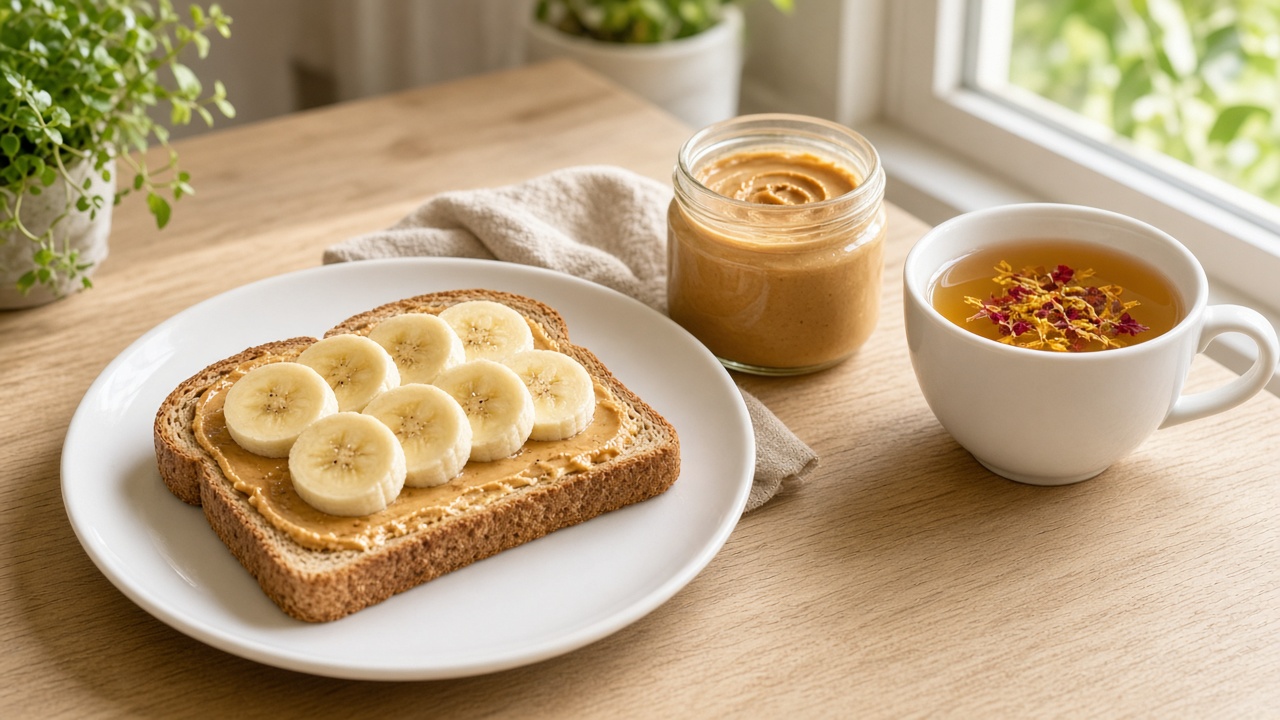
My go-to is simple: one slice of whole-grain toast, one level tablespoon of smooth peanut butter, and a sliced banana on top.
Gentle Foods That Go Well With Peanut Butter
These pairings work for me:
- Oatmeal (here’s how I make oatmeal gentle)
- Ripe banana (my take on whether bananas are good for acid reflux)
- Whole-grain toast or a plain rice cake
- Sweet apple or ripe pear slices
- Celery sticks
- A small drizzle of honey (I wrote about using honey gently)
You’ll find more morning ideas in my Barrett’s esophagus breakfast ideas.
What I Skip
These are the peanut butter habits that gave me trouble:
- Eating it out of the jar. It’s easy to eat four or five spoonfuls without noticing. I measure a level tablespoon now.
- Chocolate peanut butter treats. Chocolate is a common reflux trigger, so peanut butter cups and chocolate spreads are out for me.
- Peanut butter on buttery foods. Butter plus peanut butter is a lot of fat in one bite.
- Big peanut butter shakes and smoothies. Large, rich drinks fill the stomach fast.
- Peanut butter with coffee. The coffee bothered me more than the peanut butter. I wrote about coffee and Barrett’s esophagus here.
- A late-night peanut butter snack. Even a gentle food can bother me if I eat it close to bedtime.
My Barrett’s Esophagus Foods to Avoid article covers the rest of the foods I limit.
Tips If You Want to Try Peanut Butter
- Start with one level tablespoon. See how you feel over the next few hours.
- Read the label. Look for peanuts and salt, with little or no added sugar or oil.
- Spread it thin on a gentle food. Toast, oatmeal, banana, or apple are good places to start.
- Eat it earlier in the day. Breakfast or an afternoon snack works better for me than a bedtime snack.
- Sit up afterward. Don’t lie down for about 3 hours after eating.
- Keep notes. Write down what you ate and how you felt. In a week or two you’ll see your own pattern.
If you have a peanut allergy, skip peanut butter completely and talk with your doctor about other options.
What About Almond Butter?
Almond butter is a good swap if peanut butter bothers you. It’s also high in fat, so the same rule applies: keep it to about a tablespoon and spread it thin. Some people find it a little easier on their stomach. Test it the same way you would peanut butter.
My Evening Wind-Down
What I ate during the day was only half the story. Nights were the other half. I used to snack late, and peanut butter was one of my favorite late snacks. Now I finish dinner early, make a warm cup of caffeine-free herbal tea, sit down, and let my stomach settle before bed. If you’d like to try the blend I drink every night, you can learn about Barrett’s Tea here. A one-month supply is $49, with no subscription, or $39 a month.
Frequently Asked Questions
Is peanut butter bad for acid reflux?
Not for most people, as long as the portion is small. Peanut butter is high in fat, and a lot of fat at once can bother reflux. One level tablespoon on a gentle food is a good place to start.
Is peanut butter acidic?
No. Peanut butter isn’t an acidic food like tomatoes or citrus. The bigger concern for reflux is the fat, not acid.
Is smooth or crunchy peanut butter better for reflux?
Smooth is usually easier to swallow, especially if your throat feels sore. If crunchy doesn’t bother you, it’s fine.
Can I eat peanut butter at night with acid reflux?
I don’t anymore. I try to finish eating 3 hours before bed. If nights are your hard time, my article on GERD at night has more on calmer evenings.
Is peanut butter good for silent reflux?
Some people with silent reflux do fine with a small amount of smooth peanut butter. My silent reflux (LPR) foods article lists what I eat and what I avoid.
Can I eat peanut butter with Barrett’s esophagus?
I do, in small amounts. It fits on my Barrett’s esophagus food list. Keep portions small, pair it with gentle foods, and follow your own doctor’s advice for your situation.
The Bottom Line
Peanut butter can be a gentle, filling part of a reflux-friendly diet when you keep it small and simple. Pick a plain smooth kind, use about a tablespoon on toast, oatmeal, or fruit, and skip the chocolate treats, big shakes, and late-night spoonfuls. Pay attention to how you feel, and keep notes so you learn your own pattern.
Want a simple list of what to eat and what to skip? Grab my free Acid Reflux Food Guide here.